
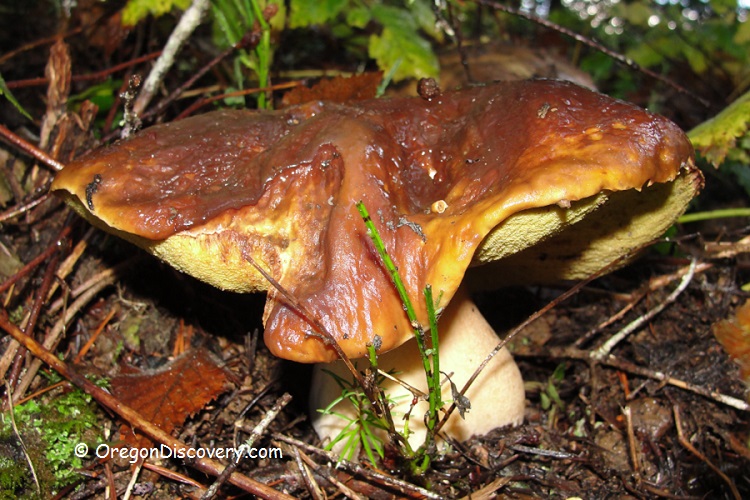
When wild mushroom season begins in Oregon, take a moment to learn the rules before heading out. Knowing where and how much you can collect can help make your mushroom hunting safer and more enjoyable.
Bureau of Land Management (BLM)
Rules for collecting mushrooms on BLM lands vary by location. Small amounts can generally be collected for personal use without a permit, but quantity limits and other rules may apply. Mushrooms collected for personal use cannot be sold or bartered.
Before collecting, contact the local BLM office to find out which regulations and permit requirements apply to the area where you plan to harvest.
National Forests
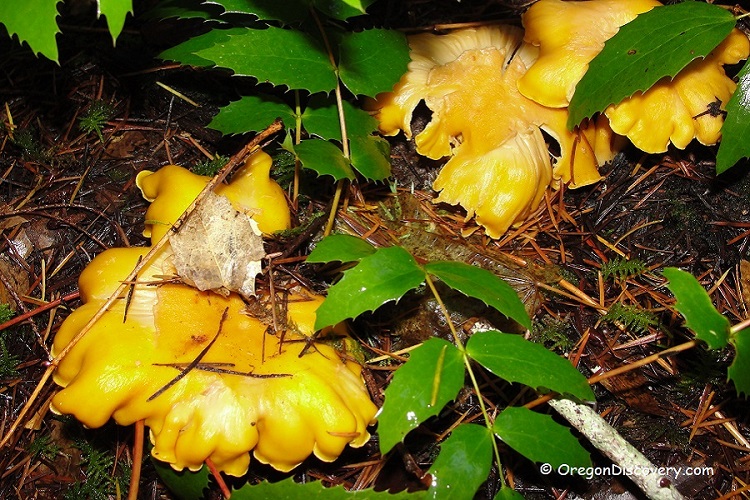
Siuslaw National Forest. No permit or fee is required to collect up to one gallon of mushrooms per person per day for personal use, except for Matsutake mushrooms. If collecting more than one gallon per day, even for personal use, a permit is required.
Malheur, Umatilla, and Wallowa-Whitman National Forests. No permit is required to collect up to one gallon of mushrooms in Oregon or up to five gallons in Washington for personal use. Mushrooms collected for personal use cannot be sold, bartered, or given away. A permit is required for larger quantities.
Deschutes, Fremont-Winema, Umpqua, and Willamette National Forests. A Free-Use Permit is required under the free-use program. The permit is free and allows the collection of up to two gallons of mushrooms per day on any 10 days during the calendar year.
Mushrooms collected under the Free-Use Permit must be cut in half lengthwise and separated at the time of harvest.
Mushroom harvesting is not allowed in some areas, including wilderness, developed recreation areas, and other designated areas. Commercial harvesting is allowed in some National Forest areas with a permit. Rules vary by forest, so check with the local ranger district before collecting.

Oregon State Forests
On state forestland managed by the Oregon Department of Forestry (ODF), personal-use mushroom harvesting of one gallon or less per vehicle is allowed without a permit in the Astoria, Tillamook, Forest Grove, North Cascade, and West Oregon Districts.
Oregon State Parks and Recreation Areas
Oregon State Parks allow visitors to gather berries, fruits, and mushrooms for personal consumption in quantities not exceeding one gallon per person per day.
Some parks may restrict harvesting in overnight camp areas and other park areas. Check posted signs and current park regulations before collecting.

Logging Roads and Trails
Mushroom collecting on logging roads and trails may require permission or a permit, depending on the landowner and location. Check posted information or contact the landowner before collecting.
Always be mindful of active logging operations. Watch for logging trucks and other heavy equipment, and never block roads or access routes.
Psilocybin Mushrooms
Wild harvesting of psilocybin-producing fungi is not permitted under Oregon's regulated psilocybin system. Do not collect wild psilocybin mushrooms for use as psilocybin products.
Matsutake and Truffles
Truffle and Matsutake harvesting regulations differ from those for many other wild mushrooms. Quantity limits, permits, designated areas, and harvesting methods can vary by location.
Contact the local land management agency or landowner to find out which rules and permits apply before collecting.
Check Before You Go
Mushroom harvesting regulations can differ considerably depending on who manages the land. Before heading into the forest, verify the current rules with the appropriate land manager, especially if you plan to collect more than the personal-use limit or harvest Matsutake, truffles, or other specially regulated fungi.
Supervisor's Office
3106 Pierce Parkway Suite D
Springfield, OR 97477
541-225-6300
Detroit Ranger District
44125 North Santiam Highway SE
Detroit, OR 97342
503-854-3366
McKenzie River Ranger District
57600 McKenzie Hwy
McKenzie Bridge, OR 97413
541-822-3381
Middle Fork Ranger District
46375 Highway 58
Westfir, OR 97492
541-782-2283
Sweet Home Ranger District
4431 Highway 20
Sweet Home, OR 97386
541-367-5168
You May Also Like
Disclaimer
This is not an official guide to wild mushroom foraging. Please do your own research and learn from an experienced mushroom expert before collecting or consuming any wild mushrooms.
Before you begin foraging, learn to accurately identify both edible and toxic mushrooms. Never consume a wild mushroom unless you are certain of its identification and edibility. Follow proper preparation and cooking instructions for each species, as some edible mushrooms must be thoroughly cooked before consumption. Be aware that even correctly identified edible mushrooms can cause adverse reactions in some people.
Hello,
I just wanna double check about mushroom permit for one gallon, this is I don’t needed have any forest area, right? Because every year I was going to ranger office and take a free permit to pick mushrooms. When this is was change, because I never heart this before, thank you
For the National Forests, one gallon for one person without permit except Matsutake. If you want to collect 2 gallons of mushrooms a day during any 10 days calendar year, you can obtain a free permit.
I am new to mushroom picking/ harvesting and dont want to break any laws. What if I pick or harvest some to identify that I don’t know are un-aloud. I would take them to the forestry department for identification most likely.
I have heard about people going into logging trails off the highways. I don’t want to trespass onto territory that could get me in trouble but I cannot find info if it is ok to mushroom hunt on the logging trails and areas where trees have been cut. I also hope this is the right place to ask.
I’ve been sticking to state parks but all of the trails are picked out. Are logging roads ok to explore for mushrooms?
Yes, logging trails usually require a free permit. When you arrive at the main entrance to the logging site look around for signage to obtain a permit.