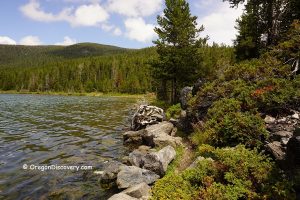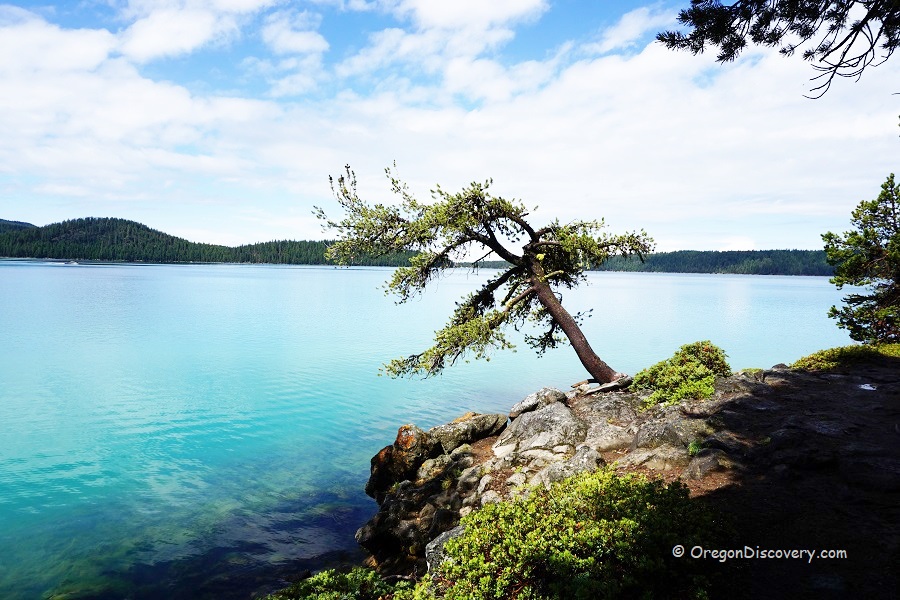
• Paulina Lake is the largest and deepest in the Newberry Caldera
• The lake is fed by water from rain, snow melt, and hot springs
Paulina Lake is one of two deep crater lakes located inside the Newberry Caldera within the Newberry National Volcanic Monument.
The caldera, about 5 miles wide, contains more than 50,000 acres of volcanic landscape, including Paulina Lake, East Lake, hot springs, Paulina Peak, Paulina Falls, and the Big Obsidian Flow.
Geology of Newberry Caldera
The caldera was formed by a series of volcanic eruptions and the collapse of the overlying volcano's dome. It took approximately 600,000 years of volcanic activity to create the caldera we see today.
The last of the eruptions that formed the caldera occurred as recently as 1,300 years ago.
While there was initially only one lake, subsequent lava eruptions filled a middle section of the large crater, dividing it into two water bodies.

Elevated 6,300 feet above sea level, Paulina Lake is the largest (1,530 acres) and the deepest (250 feet) lake in the caldera, with depths reaching up to 250 feet.
It is fed by snowmelt, rain, and hot springs, as well as groundwater connections between East Lake and Paulina Lake. The lake's outflow is controlled by Paulina Creek, which flows west toward the Little Deschutes River.
The waters of both lakes are influenced by geothermal activity, giving them higher mineral content due to nearby hot springs.
Paulina Lake - Things to Do and See
Today, both lakes in the Newberry Caldera are a year-round destination offering activities such as hiking, boating, fishing, paddleboarding, skiing, and soaking in hot springs, along with scenic views of the caldera rim and Paulina Peak.
The high alpine lakes of the Newberry Caldera—Paulina Lake and East Lake—offer opportunities for swimming, boating, kayaking, paddleboarding, and more. Both motorized and non-motorized boating are allowed, with a 10 mph speed limit. Boat rentals are available at Paulina Lake Lodge on the west side of Paulina Lake.
Swimming
Swimming is available on the southwest shore of Paulina Lake near Paulina Lake Campground and a resort.
Fishing
Paulina Lake is known for its cold, mineral-rich waters influenced by nearby geothermal activity, supporting fish species such as kokanee, rainbow trout, and brown trout.
Boat rentals for fishing are available at Paulina Lake Lodge from late spring through fall.
The lake is also known for producing large brown trout and kokanee, making it a popular fishing destination.
Fishing methods include:
- Trolling(most common)
- Still fishing with bait
- Fly fishing in shallow areas.
The best fishing seasons are spring, summer, and fall.
Hiking & Backpacking & Mountain Biking
The Newberry National Volcanic Monument contains over 100 miles of trails used for hiking, horseback riding, and mountain biking.
In winter, many of these trails are used for cross-country skiing and snowmobiling.
East Lake and East Lake Hot Springs
East Lake Hot Springs, located along the southeast shore of East Lake, consists of geothermal springs that rise from the lakebed.
Some springs become visible along the shoreline when water levels are low.
Paulina Lake Hot Springs
Located on the northern edge of Paulina Lake, the hot springs consist of geothermal vents that emerge from the lakebed and shoreline.
Many of these springs are submerged, where they mix with the colder lake water.
Swimming is allowed on the southwest shore of Paulina Lake near the campground and resort area.
Paulina Peak
Paulina Peak, the highest point of the Newberry Volcano, can be reached by road or hiking trail south of Paulina Lake.
It offers panoramic 360-degree views of the surrounding volcanic landscape. The final section of the road is unpaved and not suitable for RVs.
Paulina Creek Falls
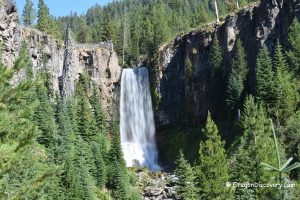
Located in Newberry National Volcanic Monument, the double plunge 80-foot Paulina Creek Falls on Paulina Creek drains from Paulina Lake.
There is an accessible trail to picnic sites and a viewpoint.
Also, you can hike 0.25-mle down to the waterfall base for the best view and stunning photos.

Big Obsidian Flow
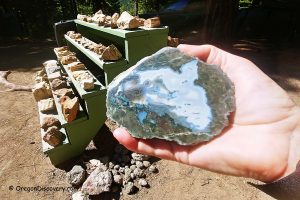
The Big Obsidian Flow is the largest obsidian lava flow in the United States, formed about 1,300 years ago. Obsidian from this area was used by Native Americans for tools and arrowheads.
It has also been studied by scientists and used in astronaut training programs.
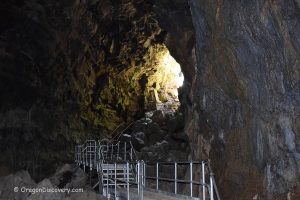
A one-mile interpretive trail leads visitors through this volcanic landscape. Removing rocks from the monument is prohibited to protect the site.
To find out where you can legally collect obsidian rocks, check Lake County Rockhounding Sites.
Paulina Lake Camping and Lodging
Camping at Paulina Lake is popular, with two main campgrounds: Paulina Lake Campground and Little Crater Campground.
Both offer tent and RV sites, picnic tables, restrooms, drinking water, and access to the lake for recreation. Reservations are usually required during the summer season and can be made through Recreation.gov.
For more comfortable lodging, Paulina Lake Lodge offers cabins, food, and boat rentals. Additional hotels and accommodations are available in Bend, a nearby city.
Paulina Lake | Facts
Open: Year-round, some road can be closed due to snow
Managed by: U.S. Forest Service
Amenities: Cafe and restaurant, picnic areas, visitor center, convenience store, gift shop, restrooms
Activities: Camping, hiking, biking, fishing, swimming, boating, and soaking
Distance from the parking: Vary
Road access: Any passenger vehicle
Day-use fees: Yes, or Recreation Pass
Elevation: 6,350 ft (1,935 m)
Paulina Lake is located:
- 19 miles east of La Pine
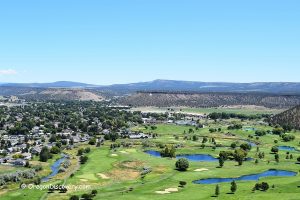
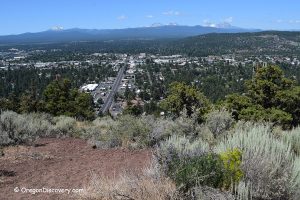
- 39 miles southeast of Bend
- 131 miles east of Eugene
- 200 miles southeast of Portland.
Type: Crater Lake
Surface area: 1,531 acres (619.6 ha)
Maximum depth: 250 ft (76 m)
Minimum depth: 40 ft (12 m)
Transparency: 13 ft (4 m)
Adventures Nearby
Directions to Paulina Lake
From Bend,
- Travel approximately 23 miles south onto US 97 to Paulina East Lake Road
- Turn left onto Paulina East Road and drive 13 miles east to Paulina Lake.
GPS (Paulina Visitor Center): N 43°42.665' W 121°16.528' | 43.711080, -121.275472
🔵 The road into the Newberry Monument is closed by snow sometime between November and May. The Ten-Mile sno-park allows access for the last three miles to the Caldera by snowmobile or skis.