
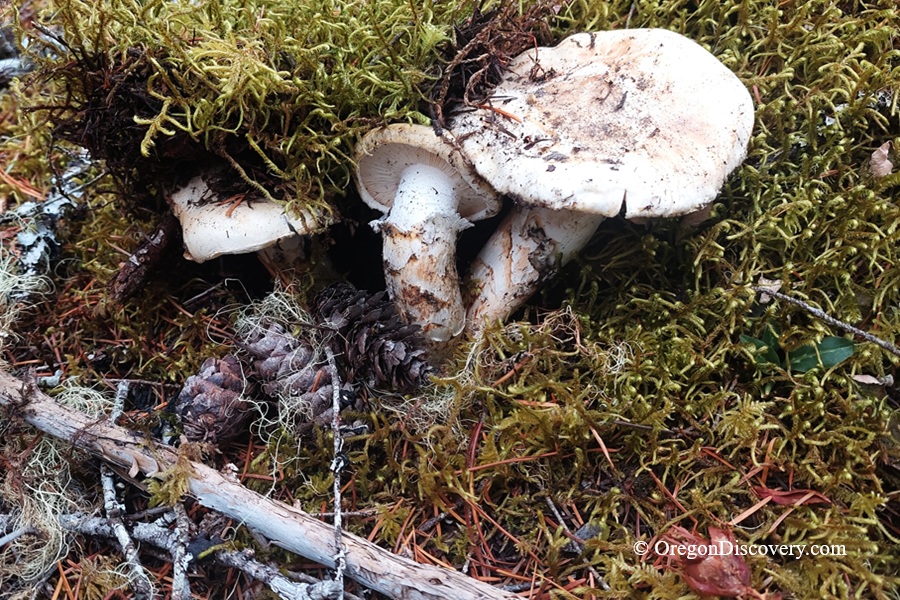
Matsutake is one of the most unusual gourmet mushrooms. Premium specimens are highly prized in Japan and other parts of Asia for their spicy, cinnamon-like aroma and distinctive flavor.
Although matsutake mushrooms grow in different parts of the world, the Pacific Northwest is known for its commercial harvest of western matsutake. Also called white matsutake or pine mushroom, it has a white to creamy cap when young and may develop pale brown or cinnamon-colored fibers and small scales as it matures.
Western matsutake (Tricholoma murrillianum) is closely related to Japanese matsutake (Tricholoma matsutake), but the two are separate species. Western matsutake is harvested commercially in North America for local markets and export, including to Japan.
In North America, western matsutake grows in British Columbia, Washington, Oregon, and northern California.
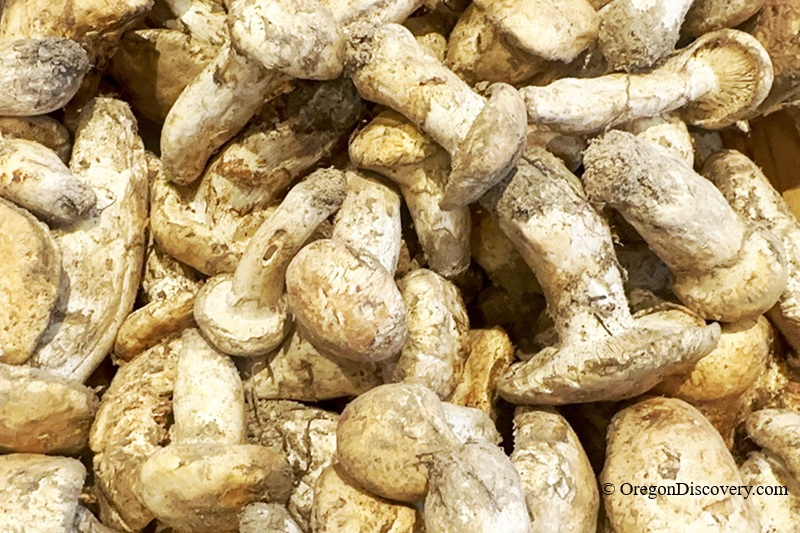
Commercial harvesters especially value young, button-shaped mushrooms with unopened caps because they hold their shape well and are suitable for shipping. Mature mushrooms can also be used in cooking. Their stems may become firm and chewy, so some people prefer to use the caps or slice the stems thinly.
Matsutake - How to Hunt and Harvest
Also called the pine mushroom, matsutake grows on the forest floor, often in sandy, well-drained soil in mixed conifer forests.
These mushrooms can be difficult to spot because they hide under moss, fallen leaves, and other forest debris. Look for small bumps in the ground, sometimes called mushrumps, which may indicate a mushroom growing underneath. Young button-shaped matsutake can be completely hidden beneath this layer of forest litter.
Matsutake often grow in groups, with other mushrooms nearby or a few feet away. If you find one, search the surrounding area carefully for more.
Picking Requirements
Improper picking techniques can disturb matsutake habitat and reduce future fruiting. Careful harvesting helps protect the forest floor and the mushroom's growing environment.
Locate matsutakes by watching for small bumps in the duff or litter layer. Carefully clear a small amount of duff around the mushroom if necessary to locate the base. Do not rake the forest floor while searching, as raking can disturb the litter layer and damage matsutake habitat.
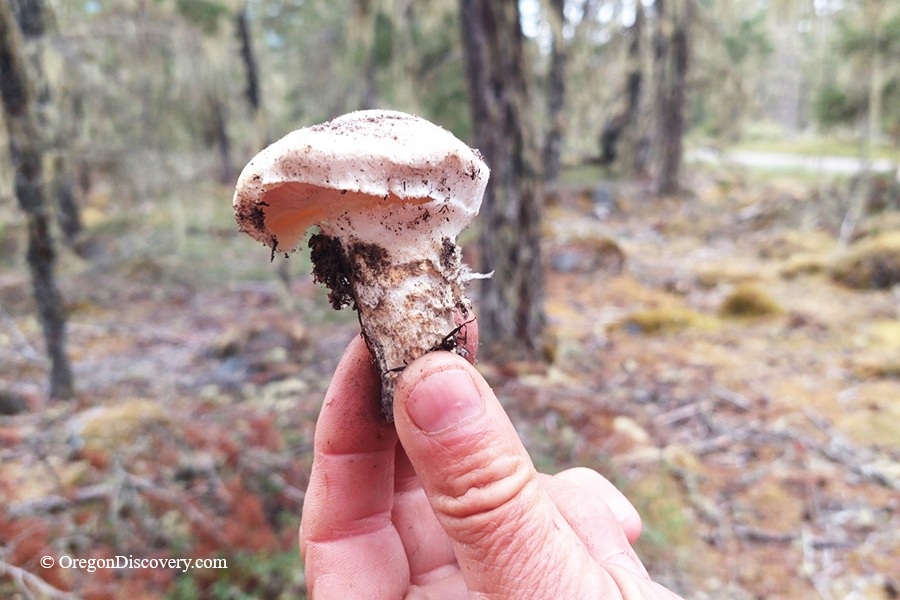
Carefully remove the mushroom with minimal disturbance to the surrounding soil by inserting a knife under the base and prying it up and out of the ground. Remove excess dirt while holding the mushroom upright to help keep the gills clean.
After harvesting, replace the soil and duff around the hole and gently pat it back into place. This helps protect the forest floor and matsutake habitat.
How to Identify Matsutake Mushrooms?
Smell
The smell is one of the best indicator for identifying matsutake mushrooms. Their strong, unusual aroma is often described as a mix of cinnamon, spicy herbs, and earthy notes. The scent is distinctive, but it can be difficult to describe.
Some people notice a sweet, spicy smell, while others describe it as smelling like dirty socks.
Steam
The stem should feel firm and resist being crushed easily between your fingers.
Color Changes
When cut, matsutake flesh should not stain.
Partial Veil
Matsutake mushrooms often have a thin covering called a partial veil beneath the cap. It may leave a ring around the stem as the mushroom grows.
Associated Plant
Besides pine trees, Matsutake mushrooms sometimes grow near a small, unusual plant called Allotropa, also known as sugarstick. This plant lacks chlorophyll, so it cannot make its own food using sunlight. Instead, it depends on a partnership involving matsutake fungi to obtain nutrients. Finding this plant in the woods may be a clue that matsutake mushrooms grow nearby.
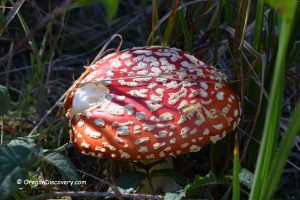
⚠️ Caution: Do not confuse White Matsutake with White Amanita, which can have a bulbous base and a volva around the bottom of the stem.
Cap: Firm, broad, and convex, becoming flatter with age; white to yellowish or pale brownish, often with darker areas toward the center; 2-8 inches (5-20 cm) wide.
Cap's Underside: White, closely spaced gills when young, becoming cream to brownish with age.
Veil: A partial veil covers the gills of young mushrooms and forms a soft, cottony ring on the stem as the mushroom matures.
Spores & Print: Elliptical to broadly oval, colorless; spore print white.
Stem: Thick, firm, and fibrous, often tapering toward the base rather than forming an Amanita-like bulb; 2–6 inches (5–15 cm) long.
Flesh: Firm and white.
Habitat: Fruits on the ground, often in sandy or well-drained soil beneath conifer trees.
Season: August to November.
Features: Distinctive spicy, cinnamon-like aroma, firm flesh, white to yellowish cap, and a partial veil forming a ring on the stem.
Where and When to Find White Matsutake in Oregon
In Oregon, matsutake is particularly associated with coastal forests, coastal dunes, and the Cascade Range, especially the southern Cascades.
It is also found in the Willamette, Umpqua, Deschutes, and Fremont-Winema National Forests.
Mushrooms are often hidden among moss, leaves, and plant litter on the forest floor, so look carefully for small bumps or other signs of mushrooms beneath the duff.
Cascade Range
In the Cascade Range, White Matsutake occurs on both the east and west sides, particularly in mixed-conifer forests with ericaceous shrubs. It associates with trees including Douglas-fir, western hemlock, western white pine, and ponderosa pine.
Sugarstick is closely associated with matsutake mycelium and can be a useful indicator of matsutake habitat. This unusual plant belongs to the Ericaceae family and may help identify areas worth exploring.
Matsutake is common in parts of the southern Cascade Range, including the Diamond Lake Ranger District of the Umpqua National Forest, the Crescent Ranger District of the Deschutes National Forest, and the Chemult area of the Fremont-Winema National Forest. It also occurs in suitable habitats farther south in southwestern Oregon and northern California.
Oregon Coast and Sand Dunes
Matsutakes are found occasionally along the northern Oregon Coast and are often associated with shore pine.
Central and southern coastal forests provide important matsutake habitat. King Boletes, Matsutakes, and Lobster Mushrooms can be found in forested areas of Oregon's coastal dunes.
Matsutakes grow on naturally stabilized dune platforms among shore pine, Sitka spruce, and western hemlock, as well as manzanita, salal, evergreen huckleberry, and Pacific rhododendron.
The main season is from September to November, but the timing varies by location and weather.
Matsutakes usually appear first at higher elevations. Later, they can be found at lower elevations and along the Oregon Coast.

Matsutake Harvesting Rules and Permits
Before heading into the woods to collect matsutake mushrooms, check the current rules for the specific area. Permit requirements, daily limits, and harvesting methods vary by land manager and location.
For example, in the Siuslaw National Forest, you may collect up to six matsutake mushrooms per day for personal, non-commercial use without a permit. Each mushroom must be cut in half lengthwise immediately after picking. A permit is required if you plan to collect more than six mushrooms per day or harvest them for sale.
Mushroom collecting is prohibited in some protected areas, including certain wilderness areas, botanical areas, research natural areas, and designated scenic areas. Restrictions vary by location, so always check the current Forest Service regulations and maps before harvesting.
Methods of Cooking
🟡 Wild mushroom safety: Eat wild mushrooms only when they have been positively identified as an edible species.
Methods of cooking include stir-frying, sautéing, drying, pickling, preserving, and freezing. Roasting or grilling is a great way to preserve the mushroom's distinctive aroma and flavor.
White Matsutake Grilling (1 lb /450 g)
- Clean the mushrooms carefully with a brush and briefly rinse with water if needed. Trim and discard the base of the stem.
- Slice the caps and stalks and place them in a bowl.
- Add 1 finely grated garlic clove.
- Sprinkle with sea salt and pepper to taste.
- Add 2 tablespoons of olive oil and toss to coat evenly.
- Place the sliced mushrooms in the center of a large piece of foil and fold it into a packet.
- Grill over medium-high heat for 12–15 minutes, or until the mushrooms are tender, turning the packet halfway through cooking.
You May Also Enjoy



Disclaimer
This is not an official guide to wild mushroom foraging. Please do your own research and learn from an experienced mushroom expert before collecting or consuming any wild mushrooms.
Before you begin foraging, learn to accurately identify both edible and toxic mushrooms. Never consume a wild mushroom unless you are certain of its identification and edibility. Follow proper preparation and cooking instructions for each species, as some edible mushrooms must be thoroughly cooked before consumption. Be aware that even correctly identified edible mushrooms can cause adverse reactions in some people.