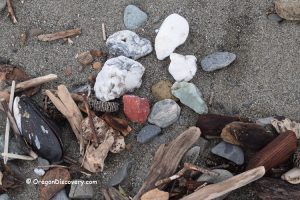
If you go gold panning, rockhounding, or beachcombing, a sifter or classifier is one of the cheapest upgrades you can buy. It saves your back, your time, and your patience.
In this guide, I'll cover:
- The difference between a sifter and a classifier (beginners mix these up all the time)
- How mesh size works, in plain words
- The 3 sifting tools I'd pick
- How to use them in the field
Let's get into it.
Sifter vs. Classifier: What's the Difference?
What Is a Sifter?
A sifter (also called a sieve or soil sifter) is usually a handheld screen. Most have a wood or metal frame and one mesh size. You toss in dirt, shake it, and the small stuff falls through.
Gardeners use sifters for compost and potting soil. Rockhounds use them to find small agates, fossils, and crystals in loose dirt.
What Is a Classifier?
A classifier is a sifter made for prospecting. It's usually round, has a plastic frame, and sits right on top of a 5-gallon bucket. Most come in sets with different mesh sizes that stack together.
The goal is a little different, too. A classifier sorts your material by size so it's easier to pan. Gold is heavy, so it sinks through the screen with the fine stuff. The big, worthless rocks stay on top.
Quick Comparison (Sifter vs. Classifier)
| Feature | Sifter | Classifier |
|---|---|---|
| Shape | Square or round, handheld | Round, sits on a bucket |
| Frame | Wood or metal | Usually plastic |
| Mesh sizes | Usually one | Often a stackable set |
| Best for | Rockhounding, beachcombing, garden | Gold panning, sluicing |
| Keeps | What stays on top (gems, fossils) | What falls through (gold-bearing fines) |
Here's the easy way to remember it. With a sifter, you usually want what stays ON the screen. With a classifier, you usually want what falls THROUGH it.
Say you're hunting agates on the beach. The agate stays on the screen and the sand falls away. Now say you're panning for gold. You throw away the rocks on top and keep the fine sand underneath.
How Mesh Size Works (Plain English)
Mesh size tells you how big the holes are. This is the most important thing to get right.
Most classifiers use fractions, like 1/2" or 1/8". The smaller the fraction, the smaller the hole.
You'll also see numbers like "#8 mesh". That means about 8 holes per inch. So 1/8" and #8 are roughly the same thing. Keep in mind the wire takes up some space, so the real hole is a bit smaller than the label says.
My Quick Mesh Guide
| Mesh Size | What It's Good For |
|---|---|
| 1/2" | First pass. Removes big rocks and roots |
| 1/4" | Medium gravel, agates, garnets, fossils, sunstones |
| 1/8" | Small nuggets and pickers, small crystals. Great all-around size for panning |
| 1/12" | Fine gold, smaller gems |
| 1/20" | Very fine "flour" gold, black sand cleanup |
What I Look for in a Sifter or Classifier
A sifter is a simple tool. Still, a few things make a big difference.
- Rust-proof mesh. Look for stainless steel or galvanized wire. You'll be using it in rivers, creeks, and salty beach air.
- The right mesh size. Match the holes to what you're hunting. (See the chart above.)
- Stackability. For gold, stacking classifiers saves a ton of time. You sort everything in one go.
- Bucket fit. A classifier that sits on a 5-gallon bucket lets you pour water through without holding it.
- Weight. If you're hiking a mile to the creek, every pound counts.
- Strong frame. Cheap frames crack. Bent mesh lets junk slip through.
So what are you hunting most? Gold, agates, or fossils? Your answer decides which tool you should grab first.
Heading out to pan for gold?
Visit Our Amazon Store to find classifiers, pans and sifters selected for field use
Best Sifters & Classifiers for Oregon Adventures
These are the three I'd point a friend to. One is a full classifier set, one is a complete gold panning kit, and one is a simple metal soil sifter for rockhounding.SE 5-Piece Stackable Classifier Set – Best for Gold Panning
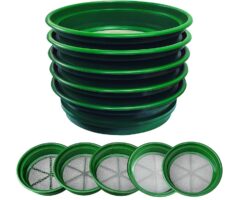
This is the set I'd buy if gold is your main target. Five screens, all stackable.
- Five mesh sizes: 1/2", 1/4", 1/8", 1/12", 1/20"
- 304 stainless steel mesh with a plastic body
- 13.25" wide, fits on top of a 5-gallon bucket
- About 4.3 lbs for the full set

If you make a purchase via our links, Oregon Discovery earns a commission at no additional cost to you
ASR Outdoor 9-Piece Gold Prospecting Kit – Best Starter Kit
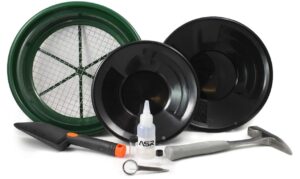
Just starting out? This kit gives you a classifier plus the gear to use it.
- 1/8" classifier screen (fits a 5-gallon bucket)
- Two dual-riffle gold pans (10" and 12"), in deep green
- Rock pick hammer with a 20 oz head
- Trowel, 4x magnifying tweezers, pickup tool, and 2 vials
If you make a purchase via our links, Oregon Discovery earns a commission at no additional cost to you
Voulosimi Metal Soil Sifter (1/4") – Best for Rockhounding & Beachcombing
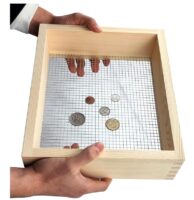
This is a classic handheld sifter. Grab, scoop, shake, and look.
- 1/4" galvanized steel mesh
- 11.8 x 9.8 inches, wood frame with handle
- Light, about 1 lb (0.45 kg)
- Also great for compost and garden soil
If you make a purchase via our links, Oregon Discovery earns a commission at no additional cost to you
Side-by-Side Comparison
| SE 5-Piece Set | ASR 9-Piece Kit | Voulosimi Sifter | |
|---|---|---|---|
| Type | Classifier set | Panning kit + classifier | Handheld sifter |
| Mesh sizes | 5 (1/2" to 1/20") | 1 (1/8") | 1 (1/4") |
| Fits 5-gal bucket | Yes | Yes | Handheld use |
| Best for | Serious gold panning | Beginners | Rockhounding, beachcombing |
| Check Price | View on Amazon | View on Amazon | View on Amazon |
How to Use a Classifier Stack (Step by Step)
It's easy. Here's how I do it at the creek.
- Set up your bucket. Fill it about halfway with water.
- Stack your screens. Biggest holes on top (1/2"), smallest on the bottom (1/8" or finer).
- Add a scoop of dirt. Don't overload it. A couple of shovelfuls is plenty.
- Shake and rinse. Pour water over it or dunk it gently. Break up clay with your fingers.
- Check the top screen. Take a quick look for nuggets before tossing the rocks. You never know!
- Pan the fines. The material that made it through goes into your gold pan.
Pro tip: Always glance at the big rocks before dumping them. Every so often, a nugget is too big to fall through. Nobody wants to throw one of those back in the creek.
Gear That Pairs Well with a Sifter
A sifter works best as part of a small kit. I usually bring:
- A compact shovel for digging gravel. See our Best Compact Shovels for Rockhounding
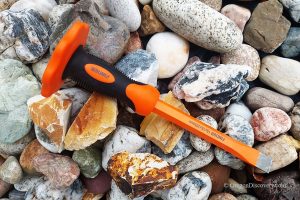
- A rock pick for breaking up packed material. Check out our Best Rock Pick for Rockhounding
- A beach scoop for the surf zone. Read our Sand Dipper Beach Scoop Review
- A 5-gallon bucket, gloves, and a small vial for your finds
FAQ: Sifters & Classifiers
What's the best mesh size for gold panning?
1/8" is the best all-around size. For fine gold, add a 1/12" or 1/20" screen after it.
What mesh size is best for agates?
1/4" works great. Most agates stay on top while the sand falls through.
Can I use a garden soil sifter for rockhounding?
Yes! A metal soil sifter works great for agates, fossils, and small crystals. Just pick one with rust-proof mesh.
Do classifiers fit a 5-gallon bucket?
Most prospecting classifiers do, including the SE set and the ASR screen above. Handheld garden sifters usually don't.
Is a sifter the same as a sieve?
Pretty much. "Sieve" and "sifter" mean the same thing. A "classifier" is a sieve made for prospecting, usually stackable and sized to fit a bucket.
Final Thoughts
A sifter or classifier won't find treasure for you. But it makes finding treasure way easier.
To sum it up:
- Gold panning? Grab a stackable classifier set.
- New to all of it? Start with a complete panning kit.
- Agates, fossils, or sunstones? A simple 1/4" metal sifter does the job.
So grab a screen, pick a creek or beach, and start shaking. Where will you test yours first?
Happy hunting, and leave the places you visit better than you found them.
You May Also Like