• Rockville is a fluorescent petrified wood site in eastern Oregon
![]()
![]()
Have you ever wanted to dig up wood that turned to stone? Rockville is the place to do it. This rockhounding site sits in the far southeast corner of Oregon, in Malheur County, just south of Succor Creek and close to the Idaho border.
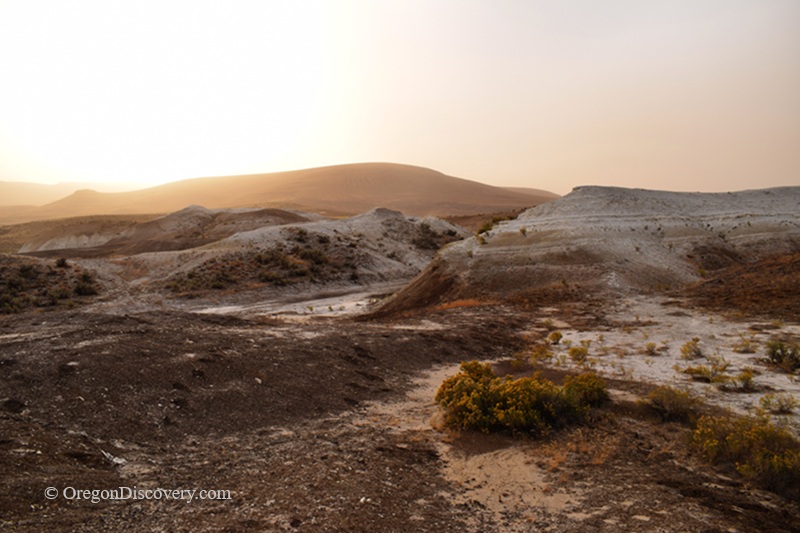
The landscape out here is classic high desert. Picture rolling white mounds, dry sagebrush, and a wide-open sky. It's quiet, remote, and beautiful in a rugged way.
This corner of Oregon is remote, so come prepared. The roads are rough, cell service drops out, and a 4WD with 10-ply tires is strongly suggested. Two big attractions sit close by, too: Leslie Gulch, about 14 miles away, and Succor Creek State Natural Area, just to the north.

Rockville Geological History
Rockville sits on Oregon's Owyhee Plateau, a region formed by massive volcanic eruptions during the Eocene and Miocene Epochs, roughly 15 to 17 million years ago.
Wave after wave of rhyolite ash, volcanic tuff, and basalt lava stacked up into thick layers of silica-rich rock. As all that material cooled, silica-laden fluids seeped into cracks and cavities, slowly hardening into agate, chalcedony, and jasper.
Whole forests got buried under the ash and sediment back then. Over time, silica replaced the wood cell by cell, turning fallen trees into stone.
Erosion has been chipping away at those old layers ever since, and today that petrified wood lies scattered across the hills and dry drainages around Rockville.

Rockville Rockhounding
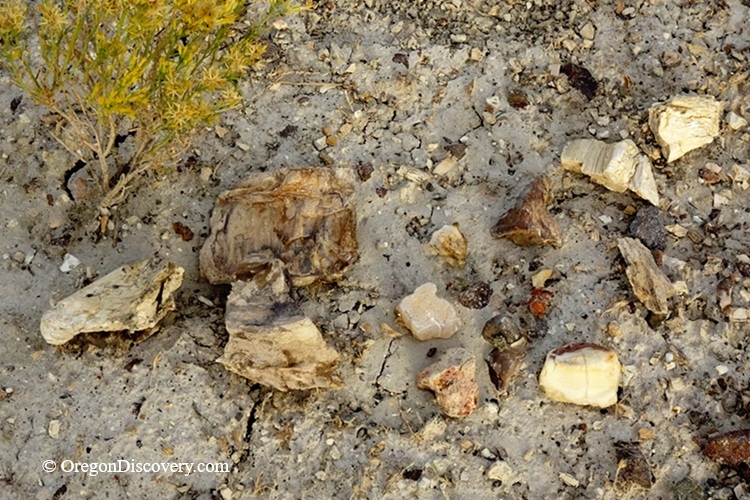
Petrified wood is the main find here, and there's a lot of it. That alone makes Rockville one of the better fossil wood spots in eastern Oregon.
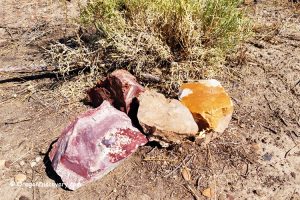
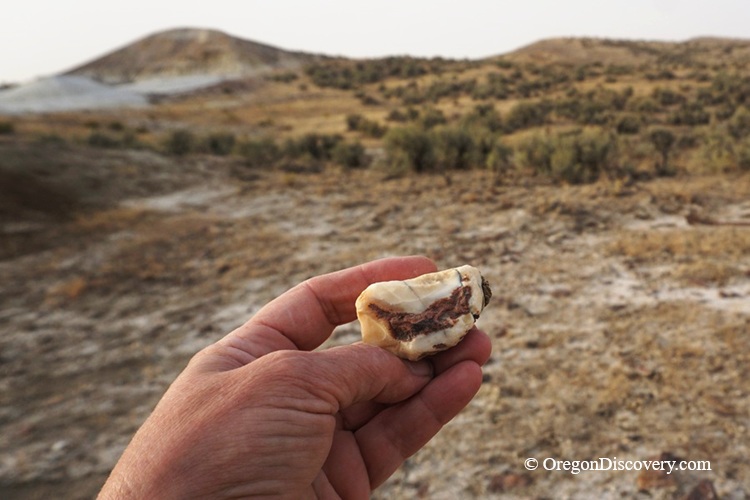
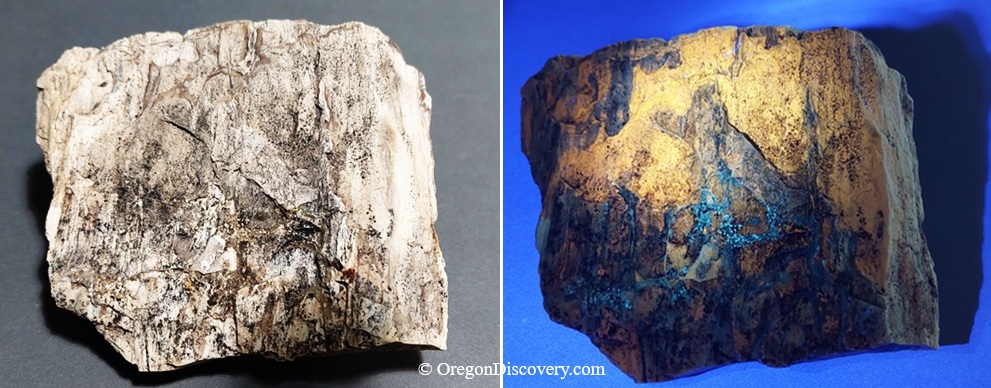
Most of what you'll pick up is opalized wood in beige, gray, brown, and deep red. A lot of it won't win any lapidary prizes, but here's the fun part: shine a UV light on it and much of it glows. That's a feature you don't get at most sites.
Hunt long enough and you'll turn up agatized wood too. It's harder, better preserved, and shows off nicer patterns. You'll also run across chalcedony-filled geodes (some of these glow as well), along with agate, jasper, and common opal scattered through the area. The wood is the star, though, and everything else is more of a bonus.
Start at your feet. There are chips all over the ground by the hills. I literally found my first pieces the second I stepped out of the truck. Just don't grab everything, or you'll end up hauling home a bag of junk. Pick up a few, get a feel for what's worth keeping, and then be choosy and go for the harder, glassier ones.
After that, head uphill. The good stuff is higher up in the mounds. See chips at the bottom of a slope? Walk them up, because they broke off something bigger sitting above. And keep an eye out for old dig holes. If someone dug there, they probably found something. A buried log is the real prize, but you'll have to work for that one.
🟡 It gets brutally hot out here in summer. Wear thick gloves, pack plenty of sunscreen and water, and bring a geology pick, a pick, and a shovel to dig out the half-buried pieces.

Camping and Lodging near Rockville Site
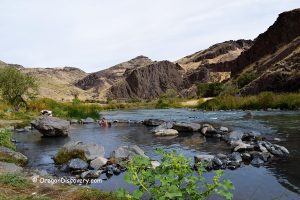
The best base camp is Succor Creek State Natural Area, just north of Rockville. It offers free primitive camping with about 19 sites, vault toilets, and no hookups, all set in a beautiful canyon along the creek.
It makes a perfect home base for exploring Rockville by day. Read our full guide before you go: Succor Creek Campground.
If you'd rather have a roof overhead, the nearest town is Homedale, Idaho about 17 miles away.
Affordable vacation rentals for short and long term stay at Homedale
The Best UV Flashlights for Rocks
I've tested quite a few UV flashlights for rock collecting.
Here is out detailed guide on Best UV Lights for Rockhounding & Fluorescent Minerals Identification
These two are my favorites:
LBJD Black Light UV Flashlight (365nm)
uvBeast New V3 365nm Black Light UV Flashlight
Rockville Rockhounding | Facts
Open: From late spring trough early fall
Managed by: Bureau of Land Management (BLM) - Vale District
Rocks & Minerals: Opalized petrified wood (often fluorescent), agatized petrified wood, chalcedony-filled geodes, agate, jasper, common opal
Tools: Geology pick, pick, shovel, UV light
Distance from the parking: Varies
Road access: 4WD prefered
Fees: None
Elevation: 4,000 ft (1,220 m)
Adventures Nearby
Directions to the Rockville Collecting Site
- Take McBride Road/McBride Creek Road and follow it for 6.2 miles
- Turn right onto Succor Creek Road and follow it for 0.3 miles
- Turn right to stay on Succor Creek Rd and continue for another 0.3 miles.