
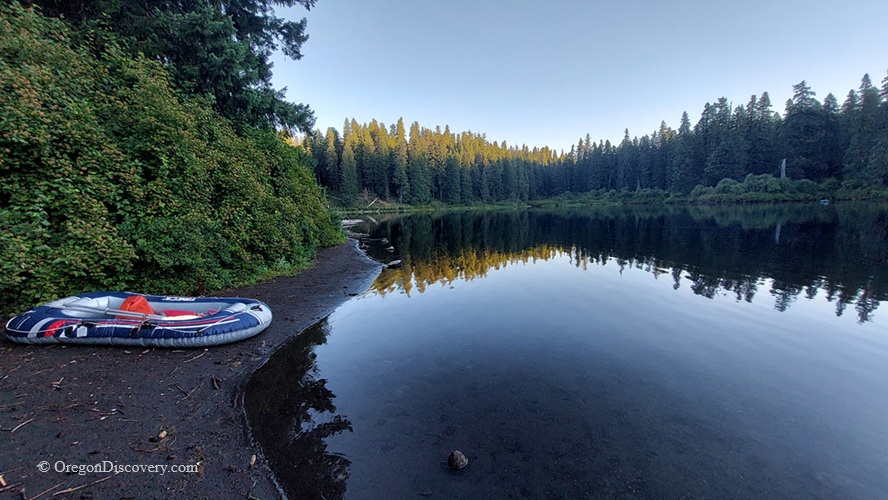
Clear Lake hides a 3,000-year-old forest of Douglas-firs still standing upright underwater


Clear Lake is a cold, spring-fed mountain lake in the Oregon Cascades, located right along Highway 126 in the Willamette National Forest. It sits at 3,012 feet, covers about 145 acres, and reaches a maximum depth of 175 feet. It is widely known as one of the clearest and coldest lakes in the Cascades, and that reputation is earned.
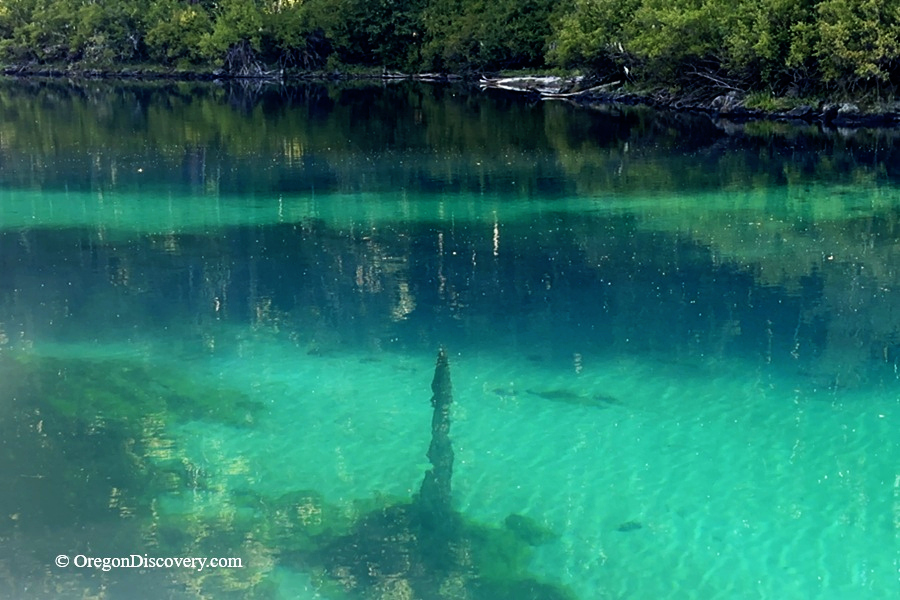
The first thing you notice is the color. The water glows turquoise near the shore and deep blue farther out. The second thing you notice is even stranger. Look down, and you will see trees standing underwater, still upright after roughly 3,000 years.
This lake is also the headwaters of the McKenzie River, which is Eugene's sole source of drinking water. Water temperatures hover between 35 and 43°F year-round, making the lake unsuitable for swimming. Instead, people come here to hike, paddle, fish, camp, dive, and stare.
Clear Lake Lodge and store stay open year-round with meals, refreshments, and boat rentals, although services and hours vary by season. Call ahead from October through April, because winter hours get short.
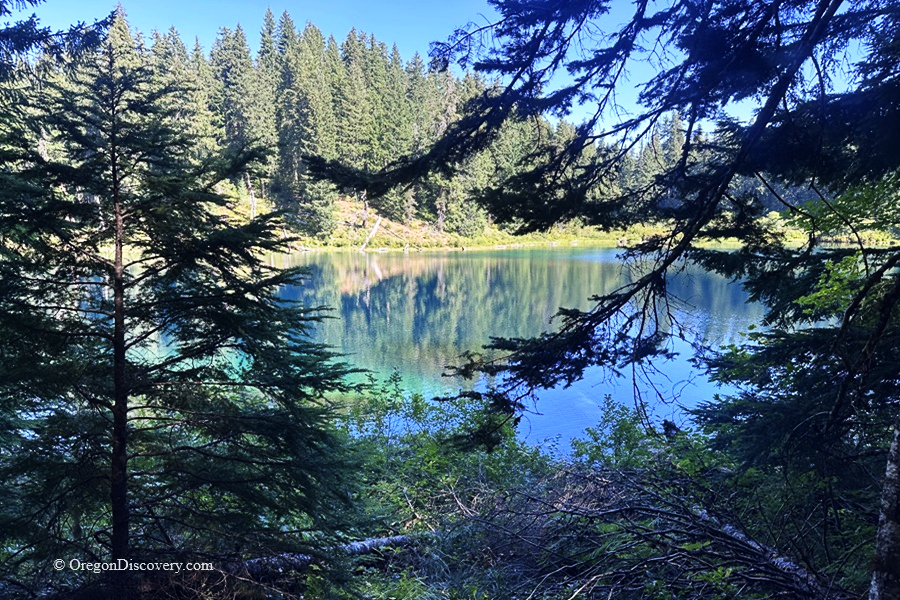
How Was Clear Lake Formed
Three thousand years ago, there was no lake here - just thick forest and a loud white-water river.
Then around 1,000 B.C., Sand Mountain erupted. Lava rolled downhill toward the McKenzie River, burning trees along the way. When the lava reached the river, it cooled and formed a natural dam.
The river backed up fast. Within a short time, the valley filled and Clear Lake was born. The streamside forest went under about 120 feet of water, and it never came back out.
European Americans did not discover the lake until 1859, when a party searching for a route over the Cascades followed an Indian trail down Hackleman Creek.
The Underwater Forest at Clear Lake
Those submerged trees are real Douglas-firs, still rooted where they grew. You can spot them in several parts of the lake, and the thickest stand sits in the northeastern section.
Why are they still standing? The near-freezing water slows the bacteria and fungi that normally break down wood. The lake works like a walk-in freezer.
And no, this is not petrified wood. Petrified wood forms when minerals replace the original organic material over a long period of time. These trunks are still wood, just soaked and chilled.
Have you ever floated over a whole forest? On a calm morning, the surface turns to glass, and you can trace the trunks from a rowboat.
Divers get the full view, which is why Clear Lake ranks as one of the best freshwater dives in Oregon.
What Makes Clear Lake So Clear
Two reasons, and both trace back to the lava.
First, the source. Snowmelt from Mount Washington and the surrounding Cascades seeps into porous volcanic rock and travels underground for more than 20 years before rising at Great Spring.
That is two decades of natural filtering with almost no silt. The lake's outlet carries roughly 250,000 gallons of water per minute.
Second, the cold. Those chilly temperatures limit the growth of algae and plankton.
The lake also turns over quickly. Its average water residence time is only about half a month, meaning water moves through the lake relatively fast.
Things to Do at Clear Lake
Hiking the Clear Lake Loop Trail
The 5-mile Clear Lake Loop Trail circles the lake, and part of the route follows the famous McKenzie River National Recreation Trail.
It stays mostly flat, but the scenery keeps flipping.
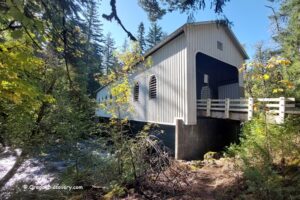
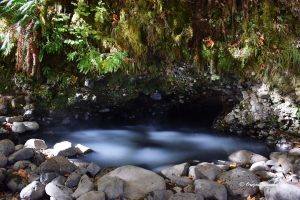
You start in old-growth fir, cross a bridge over Ikenick Creek, then reach Great Spring, where the McKenzie River bubbles up from lava rock into a small blue pool.
After that, the trees drop away, and you cross open lava fields. Hot in July, gorgeous in October. Plan on roughly 3 to 4 hours and pack extra water.
In winter, the loop makes a great snowshoe route.
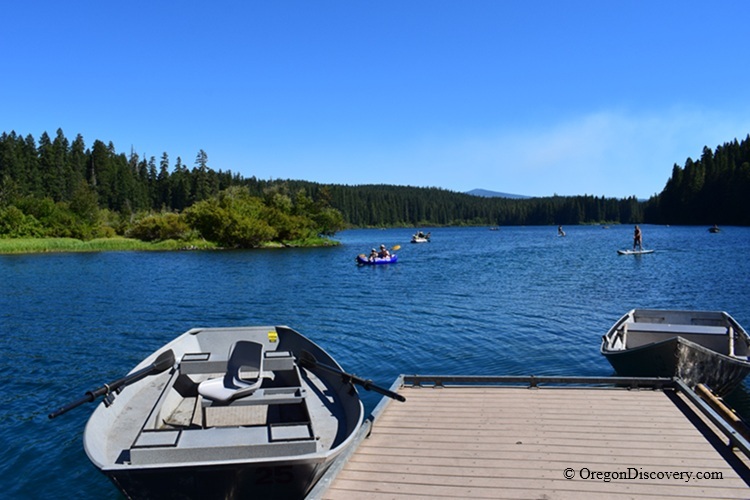
Boating & Paddling
No motors are allowed on Clear Lake, not even electric ones. That single rule is why this place feels so quiet.
Bring a rowboat, kayak, canoe, or paddleboard, or rent one at the resort. Rentals are first come, first served, although most boats are pulled from the lake during winter. Paddling is also the easiest way to float directly above the sunken forest.
Fishing
Fishing here is steady and low-key. Clear Lake supports native cutthroat trout, along with brook trout and rainbow trout. Rainbow trout are stocked annually. Bank access is decent along the loop trail, though a boat offers far more water access.
Check ODFW regulations for current seasons, limits, and licenses before you cast. Check Oregon State Marine Board rules for current boating regulations.
Scuba Diving
Divers drive a long way for this one. Clear water plus an ancient submerged forest makes Clear Lake one of Oregon's most unusual freshwater dive sites.
Take the cold seriously, though. The lake stays frigid even in August, so you need a properly fitted wetsuit or drysuit and real cold-water experience.
Disclaimer: Scuba diving requires appropriate training and equipment for cold-water conditions.
Photography & Sightseeing
Even from the shoreline, this place delivers. You get glass-clear water, submerged trunks, black lava against green forest, and views of the Three Sisters poking up to the south on clear days.
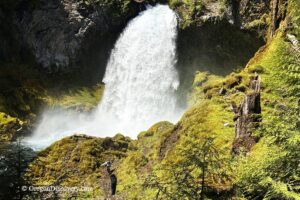
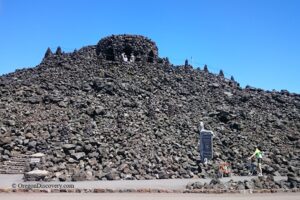
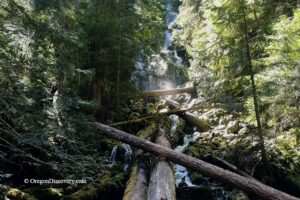
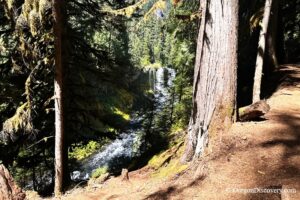
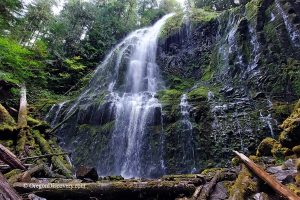
Several spectacular waterfalls are also nearby. Sahalie Falls and Koosah Falls roar about a mile downstream off Highway 126, and Proxy Falls waits farther up McKenzie Pass.
Clear Lake Camping and Lodging
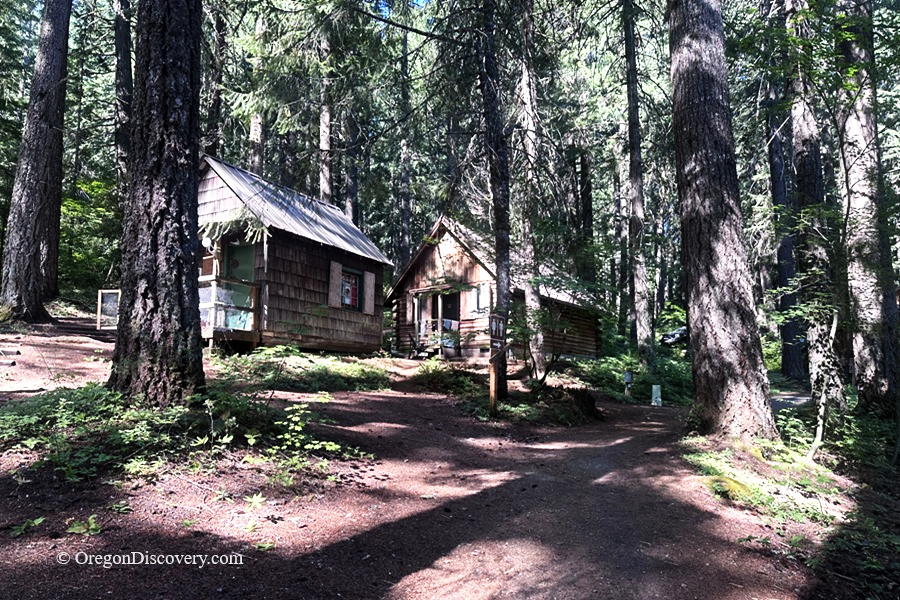
Clear Lake Resort sits at the north end and stays open all year. You will find rustic and deluxe cabins, yurts, a small store with groceries and fishing tackle, a restaurant, showers, flush toilets, and a non-motorized boat ramp.
Reservations go through Linn County Parks at linnparks.com or by phone at 541-967-3917. Dogs are welcome in cabins for a small fee, but not in yurts.
Cold Water Cove Campground sits on the east shore with 34 sites, each with a picnic table and fire ring. It runs from late May through mid-October and offers vault toilets, drinking water, and a boat launch. No hookups.
Want other options? Try Ice Cap Campground near the falls, Trail Bridge Campground, or Belknap Hot Springs south on Highway 126 for lodging and soaking pools.
One warning worth remembering: there is no cell service at the lake. The nearest signal is about 4 miles away near the Highway 20 junction, so download or print your directions first.
Other accommodation is available in Sisters or Bend.
Clear Lake | Facts
Open: Year-round (lodge and store open all year, campground late May to mid-October)
Managed by: Willamette National Forest and Linn County Parks
Amenities: Cabins, yurts, restaurant, store, boat rentals, boat ramp, restrooms, picnic shelter, campground, fish-cleaning station
Activities: Hiking, kayaking, canoeing, rowing, paddleboarding, fishing, scuba diving, camping, photography, snowshoeing
Distance from the parking: Short
Road access: Any passenger vehicle
Day-use fees: Yes, $10 per vehicle or Interagency Pass
Elevation: 3,012 ft (918 m)
Clear Lake is located:
- 86 miles northeast of Eugene
- 53 miles northwest of Bend
- 145 miles south of Portland.
Body of water: Natural lake, lava-dammed
Surface area: 148 acres (0.60 km²)
Shoreline: 3.2 miles (5.1 km)
Average depth: 50 ft (15 m)
Maximum depth: 175 ft (53 m)
Water volume: 11,800 acre-feet
Water temperature: 35 to 43°F year-round
Primary outflow: McKenzie River
Adventures Nearby


Directions to Clear Lake
From Eugene,
- Take Highway 126 east about 86 miles
- Pass McKenzie Bridge, continue past Sahalie and Koosah Falls, then watch for the signed Clear Lake turnoff on the west side of the highway.
Phone: 541-822-3381